
Chairlady: Martina Neuwirth
Treasurer: Johannes Jäger
Recording Clerk: Gerald Faschingeder
Deputy Chairlady: Sebastian Linder
Deputy Treasurer: Lukas Schmidt
Deputy Recording Clerk: Johannes Knierzinger
Members of the extended Board (without voting rights):
Cornelia Staritz +
Franz Gmainer-Pranzl
Gilbert Ahamer
Julia Eder
Stefanie Hürtgen
Julia Lichtkoppler
Karin Fischer
Melanie Pichler
Auditors:
Sebastian Luckeneder
Johannes Korak
Board members
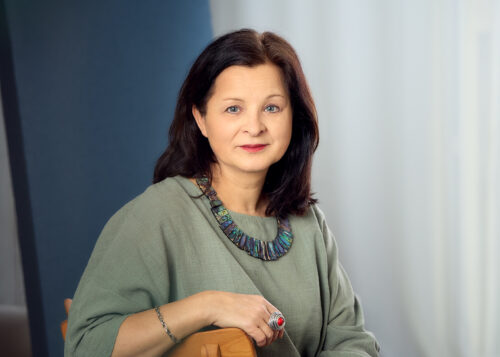
Chairlady: Martina Neuwirth is a specialist in international economics and finance at the VIDC (Vienna Institute for International Dialogue and Cooperation), a think and do tank founded by Bruno Kreisky.
Her main interest lies in inequalities in international tax policy and their impact on countries of the Global South.
She also works on development finance issues, with a particular focus on sovereign debt.
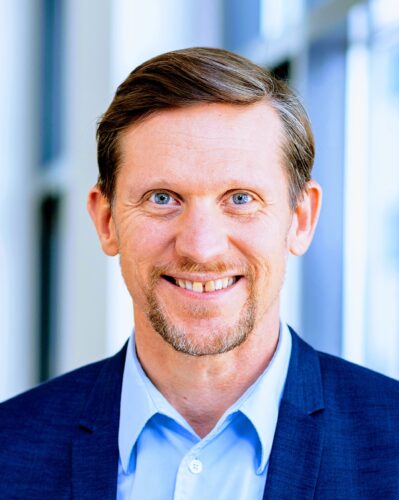
Treasurer: Johannes Jäger is a professor at the University of Applied Sciences BFI Vienna and heads the Department of Economics. His work focuses on political economy and global development.
His research interests include growth and crisis, the global financial system, sustainability, regional integration and international trade agreements, uneven development and industrialization, global distribution and raw materials as well as the real estate sector and spatial development.
Geographically, his research focuses on Europe and Latin America in addition to the global level.
Recording Clerk: Gerald Faschingeder has been coordinating the Austrian Development Conferences since 2001 (Salzburg 2001, Graz 2003, Linz 2005, Innsbruck 2008, Krems 2011, Salzburg 2014, Graz 2017, Innsbruck 2025).
From 2004 to 2009 and again since March 2020 he has served as Managing Director of the Mattersburger Kreis für Entwicklungspolitik an den österreichischen Universitäten.
He is a lecturer in the International Development Project at the University of Vienna, focusing on the field of education and development.
Since 2004, as Director of the Paulo Freire Centre, he has dedicated himself to creating spaces for reflection for engaged people in (development) policy practice.
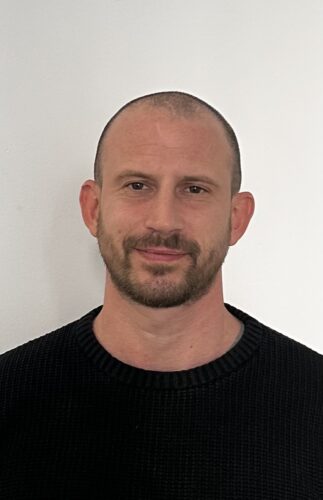
Deputy Chairlady: Sebastian Linder completed his Bachelor’s degree in International Development, focusing on Latin America. This is how he become involved with the Mattersburger Kreis, where he was an auditor for several years.
For his Master’s degree in Socio-Ecological Economics & Policy, he studied at WU (Vienna University of Economics and Business) and dedicated himself to the topic of socio-ecological transformation and sustainability.
Since 2022, Sebastian has been working at the Vienna Chamber of Commerce, where he is committed to this topic.
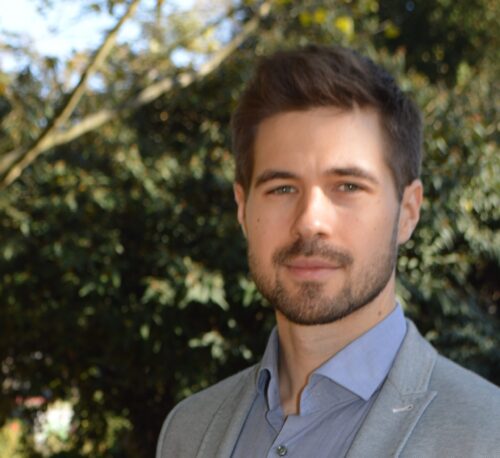
Deputy Treasurer: Lukas Schmidt is an honorary professor at the University of Applied Sciences BFI Vienna and managing director of FIAN Austria, the international human rights organization advocating for the right to food.
Within his research and teaching activities, he has published on various topics of political-economic development research, including international human rights standards, the green economy, and development theories.

Deputy Recording Clerk: Johannes Knierzinger is a Senior Lecturer at the Institute for International Development at the University of Vienna, focusing primarily on the social and political-economic dimensions of mining in West Africa.
Currently, he is also researching the growing resistance against investment protection agreements and the renaissance of pan-African movements. He leads seminars on development policy, post-growth and anti-colonialism.
Members of the extended Board (without voting rights)
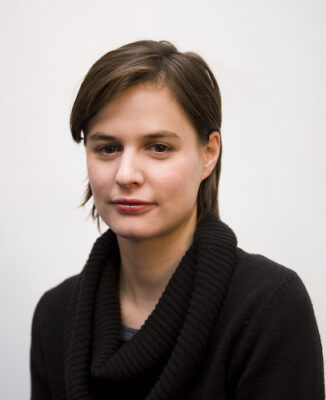
Cornelia Staritz passed away on July 3, 2025. Here you can find our short obituary.
Cornelia Staritz was Associate Professor of Development Economics at the Institute for International Development.
Her three key areas of research included: (1) global trade, production networks and structural change, (2) labour regimes/struggles and global production, and (3) derivatives markets, financialization and resource-based development.
She conducted transregional research with an emphasis on Africa, concentrating on industrial export sectors (particularly textiles and clothing), tropical agricultural sectors (cotton, cocoa and coffee), and strategic mineral sectors (copper, cobalt and lithium).
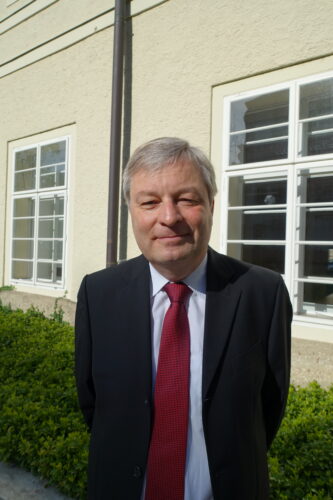
Franz Gmainer-Pranzl has been a professor at the Center for Intercultural Theology and the Study of Religions at the University of Salzburg since 2009.
His work and research focus on intercultural philosophy, intercultural theological epistemology, society and the church in Africa, Latin American liberation theology, as well as dialog with critical development research.
Since 2011, Franz has been the editor of the book series “Salzburger interdisziplinäre Diskurse”.
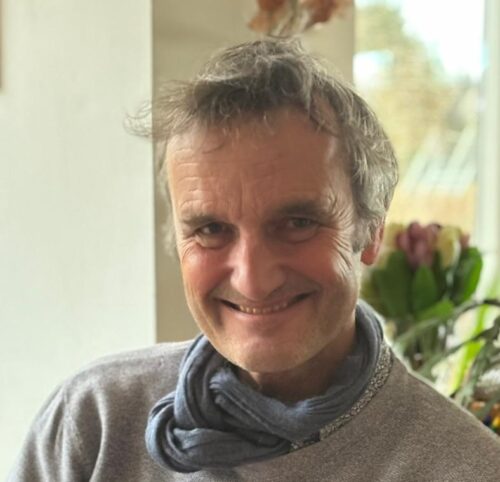
Gilbert Ahamer was co-founder of the development-oriented Master’s program “Global Studies” at the University of Graz, after holding positions at IIASA, Joanneum Research and the Austrian Academy of Sciences.
For the Federal Environment Agency, he has participated in numerous EU twinning projects between Central Europe and Central Asia.
He developed the “Global Change Data Base” for the quantitative analysis of global long-term trends in the areas of energy, economy, food, land use and population, including mobility. His Springer book “Mapping Global Dynamics” describes evolutionary structural change and the nature of space.
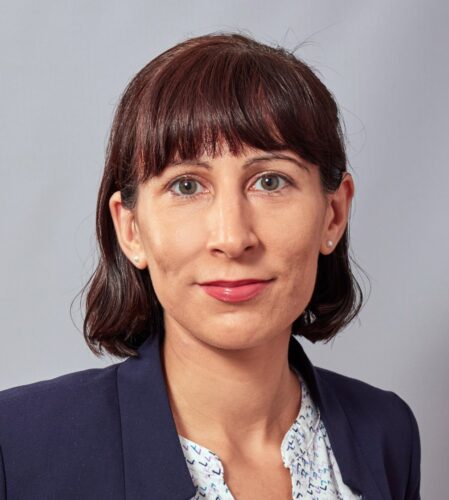
Julia Eder is an expert on EU and international affairs at the PRO-GE production union and a research fellow at the Institute for Comprehensive Analysis of the Economy at Johannes Kepler University Linz. Her work focuses on EU industrial policy and EU trade policy, as well as the integration of Austrian actors into global production networks.
Julia studied international development and has been involved in the Mattersburg Circle for many years, including in the Journal for Development Policy. She also teaches regularly at various universities.

Stefanie Hürtgen is Associate Professor of Geography and Sociology at the University of Salzburg and a Permanent Fellow at the Frankfurt Institute for Social Research.
She researches and teaches on political-economic processes of Europeanization/globalization, global production networks, and transnational labour relations.
One of her key interests is the ongoing reconfiguration of center and periphery, which she conceptualizes as “glocalization”.
Stefanie’s focus on the subjects of work and the question of how working conditions and the democratic self-empowerment of workers are connected, are important to her.
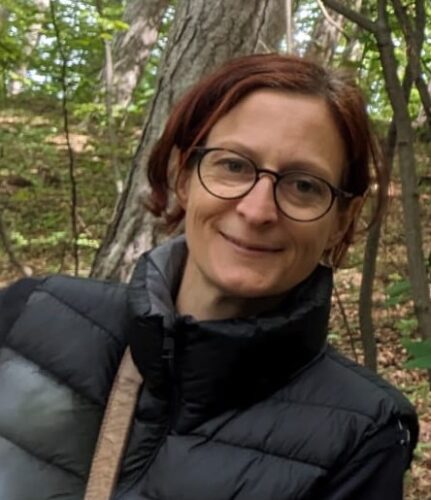
Julia Lichtkoppler works at the OeAD (Austrian Agency for Education and Internationalization). She is responsible for the APPEAR program (Austrian Partnership Programme in Higher Education and Research for Development).
APPEAR is a program of the Austrian Development Cooperation that funds international cooperation between universities as well as scholarships.
Since 2019, Julia has been involved in the establishing of Africa-UniNet/Austrian-African Research Network .
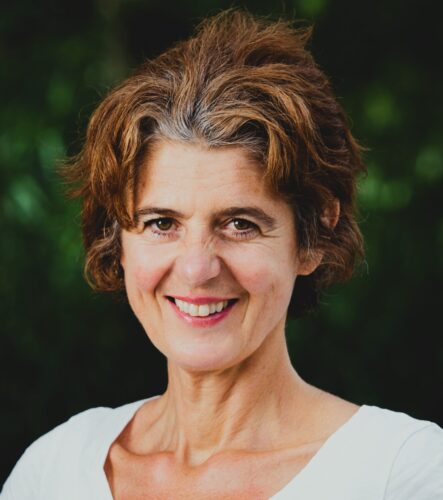
Karin Fischer is a historical social scientist and heads the Global Sociology and Development Research Department at the Institute of Sociology at the Johannes Kepler University Linz.
For many years, she was chairlady of the Mattersburger kreis and managing editor of the JEP (Journal für Entwicklungspolitik). She now remains active as a member of the extended board and the journal’s editorial committee.
Karin’s research and teaching focuses on North-South relations, global inequality, and development theories. Within this field, she has co-edited several books in the GEP and HSK-IE series as well as smultiple issues of the JEP, including on internationalisms, global commodity chains and raw materials policy.
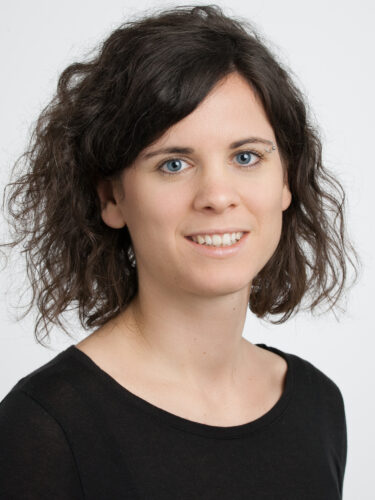
Melanie Pichler teaches and conducts research at the Institute for Social Ecology at BOKU in Vienna.
Her work focuses on the political dimensions, contested strategies, power relations and conflicts within socio-ecological transformations.
Geographically, her research concentrates on Europe, Southeast Asia and (changing) North-South dynamics.
Melanie teaches in the Master’s program Climate Change and Societal Transformation.